
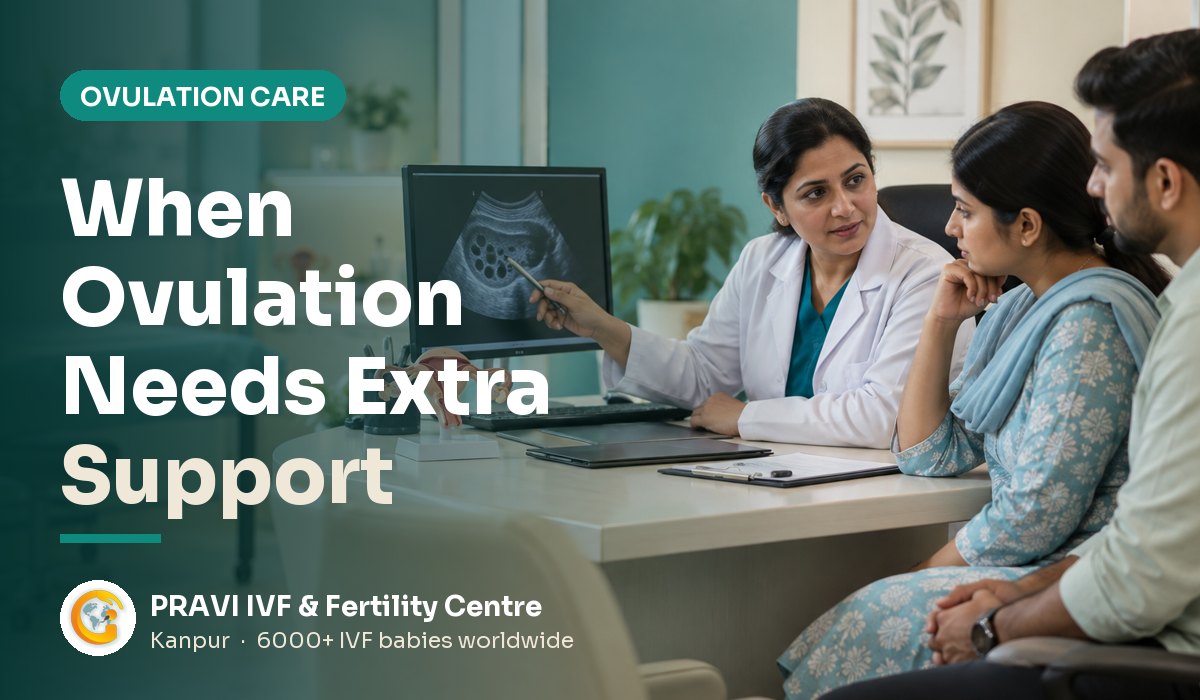
Ovulation Induction Treatment in Kanpur
Medically reviewed by Dr. Sakshi Tandon · Updated 12 Oct 2026
Ovulation induction helps women with irregular cycles release healthy eggs using simple medications and close monitoring. Learn how this gentle fertility treatment works at PRAVI IVF in Kanpur.
Waiting every month for your period to arrive can feel exhausting. When your cycle is unpredictable, knowing when you are fertile becomes almost impossible. Many women carry this worry silently, wondering why their bodies are not releasing an egg on time. If you are experiencing irregular cycles or missed periods, please know that you are not alone. There is a simple, gentle, and widely used first step that helps your ovaries do what they are meant to do: Ovulation Induction Treatment in Kanpur.
At PRAVI IVF & Fertility Centre, we meet couples every day who simply need a little medical support to balance their hormones and release a mature egg. You do not always need advanced, high-tech procedures right away. For many aspiring mothers, ovulation induction paired with natural conception or intrauterine insemination (IUI) is all it takes to bring home good newsâyour long-awaited khushkhabri.
What is Ovulation Induction?
Ovulation induction is a medical treatment designed to stimulate your ovaries to develop and release one or more mature eggs. In a natural, regular menstrual cycle, your brain sends hormonal signals to your ovaries to mature a single egg follicle each month. Around day 14 of an average cycle, this follicle bursts open and releases the egg down the fallopian tube. This release is what we call ovulation.
However, for women with irregular cycles or absent periods, this natural release does not happen regularly. This condition is called anovulation or oligo-ovulation. When there is no egg waiting in the tube, fertilisation cannot take place, no matter how carefully you time your intimacy. According to global health data from the World Health Organization (WHO) on infertility, ovulatory disorders represent one of the most common causes of female fertility challenges worldwide.
Ovulation induction uses oral tablets or gentle hormone injections to correct this chemical message. It encourages your follicles to grow steadily until a healthy, ripe egg is ready for fertilisation. Because it works alongside your bodyâs natural rhythm, it is often the first medical line of defence in comprehensive female infertility care.
Who Needs Ovulation Induction Treatment?
Not every woman trying to conceive needs ovulation induction. It is specifically designed for women whose ovaries are resting, sluggish, or unable to release eggs on a predictable schedule. During your first consultation at our clinic, our fertility experts run basic tests to understand your ovulation cycle before suggesting any treatment plan.
You may be a prime candidate for ovulation induction if you face any of the following conditions:
- Polycystic Ovary Syndrome (PCOS): PCOS is the most frequent reason women need ovulation support. In PCOS, small, immature follicles rest on the outer edge of the ovary without growing to maturity, leading to missed periods and difficulty conceiving.
- Irregular or Absent Cycles (Oligomenorrhea or Amenorrhea): If your periods come every 45 to 60 days, or vanish for months at a time, ovulation is likely irregular or absent.
- Thyroid Imbalances: An underactive or overactive thyroid gland directly alters your reproductive hormones. If you are managing thyroid-related cycle delays, exploring specialized thyroid and fertility treatment alongside ovulation support can restore regular cycles.
- Unexplained Infertility: Sometimes, both partners have normal test results, but conception still does not happen. In these situations, controlled ovulation induction can produce two healthy eggs instead of one, naturally increasing the chances of sperm meeting an egg.
- Luteal Phase Defect: Even if an egg releases, low progesterone production can prevent the uterine lining from supporting an embryo. Ovulation medications help produce a stronger corpus luteum, which maintains healthy progesterone levels.
The Step-by-Step Treatment Process at PRAVI IVF
Many couples worry that fertility treatments are overwhelming or painful. In reality, an ovulation induction cycle is simple, structured, and carefully monitored. Under the guidance of our clinical team, including Dr. Sakshi Tandon and Medical Director Dr. Monica Sachdeva, each step is explained in advance so you feel confident and supported throughout your cycle.
Step 1: Baseline Assessment (Days 2 to 3 of Your Period)
Your journey begins right at the start of your menstrual flow. On day 2 or day 3, we perform a gentle transvaginal baseline ultrasound (TVS) and check baseline hormone levels such as LH, FSH, and estradiol. This check ensures your ovaries are completely quiet, with no lingering cysts from previous cycles, making it safe to begin your medication.
Step 2: Starting Ovulation Medications
Once your baseline ultrasound looks clear, you will start your prescribed medicine. These medications are usually taken once daily for 5 consecutive days (typically from day 3 to day 7, or day 5 to day 9 of your cycle). The choice of medicine depends entirely on your body mass index (BMI), medical history, and ovarian reserve.
Step 3: Follicular Monitoring Scans
Medications alone are not enough; we must see how your ovaries respond. Around day 9 or 10 of your cycle, you will visit our centre for ultrasound follicular tracking. The doctor measures the diameter of growing fluid-filled sacs (follicles) and notes the thickness of your endometrium (uterine lining). You may need 2 to 4 quick scans spaced two days apart until one or two follicles reach optimal maturity, which is typically 18 to 20 millimetres in diameter.
Step 4: The Trigger Shot
When your dominant follicle reaches the ideal size and your endometrial lining shows a healthy multi-layered pattern, we give you a trigger injection. This injection usually contains human chorionic gonadotropin (hCG) or a GnRH agonist. It mimics your body's natural luteinising hormone (LH) surge and prompts the egg to release approximately 36 to 40 hours later.
Step 5: Timed Intercourse or IUI
Once the trigger shot is given, timing is everything. Our team will advise you on the exact window for timed intercourse at home. Alternatively, if your partner has borderline sperm counts or if you have tried timed intercourse without success, we may combine this cycle with Intrauterine Insemination (IUI), placing washed, concentrated sperm directly into your uterus at the precise moment of ovulation.
Step 6: Luteal Phase Support and Pregnancy Test
After ovulation, we support your uterine lining with oral or vaginal progesterone supplements. Two weeks after ovulation, you take a simple blood test (Serum Beta-hCG) to check for pregnancy. This waiting period can bring feelings of nervousness, but our team stays in close contact to offer gentle encouragement and clear instructions.
Medications Used in Ovulation Induction
We do not believe in a one-size-fits-all approach. Your body is unique, and your medicine should match your specific hormone profile. As highlighted by educational resources from the American Society for Reproductive Medicine (ASRM), choosing the right compound and the lowest effective dosage minimises side effects while maximising healthy follicle growth.
Here are the medications most commonly prescribed during an ovulation cycle:
- Letrozole (Aromatase Inhibitors): Letrozole is now considered the first-choice medication for women with PCOS. It gently lowers estrogen levels temporarily, prompting your pituitary gland to release more follicle-stimulating hormone (FSH). It creates a healthy uterine lining and carries a lower risk of multiple births than older medications.
- Clomiphene Citrate: A trusted, long-standing fertility drug that blocks estrogen receptors in the brain, signalling your body to increase FSH production. It is highly effective, though in some cycles it can make the cervical mucus thicker or thin out the endometrium.
- Gonadotropins (Injectable Hormones): When oral pills do not trigger egg development, low-dose injectable hormones containing pure FSH or human menopausal gonadotropin (hMG) are used. These bypass the brain and directly stimulate your ovarian follicles. They require closer ultrasound monitoring to make sure only one or two follicles develop.
- Metformin: For women with PCOS who show signs of insulin resistance, adding metformin improves insulin sensitivity, naturally rebalancing hormones and making the ovaries much more responsive to ovulation medications.
Comparing Ovulation Induction with Other Fertility Paths
Couples often ask how basic ovulation induction compares to advanced treatments like IUI or IVF. The table below outlines how each treatment differs in terms of medical intervention and complexity:
| Treatment Method | Primary Goal | How Fertilisation Occurs | Ideal For |
|---|---|---|---|
| Ovulation Induction + Timed Intercourse | Release 1-2 mature eggs naturally | Inside the woman's fallopian tubes via natural intimacy | Younger couples, PCOS, irregular cycles, normal semen analysis |
| Ovulation Induction + IUI | Stimulate ovulation and bypass the cervix | Inside the fallopian tubes after prepared sperm is placed in the uterus | Mild male factor infertility, thick cervical mucus, unexplained delays |
| In Vitro Fertilisation (IVF) | Stimulate multiple eggs for retrieval | Outside the body in a specialized embryology laboratory | Blocked fallopian tubes, severe male factor, advanced age, repeated IUI failures |
The Crucial Role of Follicular Monitoring
Taking ovulation tablets without ultrasound tracking is never recommended. When medication is taken without proper monitoring, two serious risks arise: multiple pregnancies (carrying twins, triplets, or more) and Ovarian Hyperstimulation Syndrome (OHSS).
Follicular monitoring acts as our eyes inside your pelvis. Each transvaginal ultrasound tells us:
- Whether your ovaries have responded to the current medication dosage.
- Exactly how many follicles are growing. If four or five follicles mature simultaneously, your doctor can advise skipping intercourse or cancelling the trigger shot to protect you from a dangerous high-order multiple pregnancy.
- Whether your endometrial lining is thick and receptive enough to allow an embryo to attach securely. If the lining remains thin, additional supportive treatments like diagnostic hysteroscopy can help evaluate the uterine cavity.
At our centres, our ultrasound machines deliver crisp imaging, and every scan is performed with careful attention to your physical comfort and personal dignity.
Cost Factors for Ovulation Induction in Kanpur
Compared to advanced reproductive procedures like IVF or ICSI, ovulation induction is remarkably affordable and accessible. It serves as an economical first step for couples starting their fertility medical journey. However, because each woman's hormonal response is unique, treatment costs vary naturally from cycle to cycle.
Key factors influencing your overall treatment expenses include:
- Type of Medication: Oral medications like Letrozole or Clomiphene are very cost-effective. If your ovaries require injectable gonadotropins, medicine costs will be higher because injectables involve specialized manufacturing.
- Frequency of Scans: Most women need 3 to 4 follicular tracking ultrasounds per cycle. Women with slower ovarian responses may need additional scans to track steady growth.
- Pre-Treatment Diagnostic Tests: Routine hormonal blood tests, baseline scans, and semen analyses for your partner are essential before starting any medication.
- Combined Procedures: Adding an IUI procedure or donor sperm preparation adds specific laboratory handling fees to the baseline cycle.
At PRAVI IVF, we maintain complete pricing clarity. We do not believe in surprise charges or hidden medical bills. Following your initial consultation, our financial team shares a transparent, written estimate tailored to your recommended treatment plan so you can plan with peace of mind.
Why Choose PRAVI IVF & Fertility Centre in Kanpur?
Fertility care requires both technical precision and deep human empathy. At PRAVI IVF, we combine world-class medical standards with warm, compassionate attention. We take the time to listen to your personal story, address your doubts, and respect your family's emotional journey.
When you choose PRAVI IVF for ovulation induction in Kanpur, you benefit from:
- Experienced Specialists: Our medical team is led by Dr. Monica Sachdeva, who brings 18 years of specialized experience in IVF and reproductive medicine, alongside Dr. Sakshi Tandon and Dr. Ankita (MRCOG, Fellowship in Reproductive Medicine, Diploma in Minimal Access Surgery). Our embryology wing is led by Dr. Rit Shukla, Chief Embryologist with over a decade of clinical precision.
- Convenient Locations Across Kanpur: You can easily access our modern facilities at Swaroop Nagar as well as our fertility clinic in Shardha Nagar. Frequent morning monitoring visits fit smoothly into your daily work and family routine.
- Conservative Treatment Approach: We never push patients toward complex, expensive procedures if a simpler, gentler option can help you conceive. If ovulation induction with timed intercourse is right for you, that is where we begin.
- Strict Safety Protocols: We monitor your cycles closely to maintain high success rates while minimising risks like OHSS and high-order multiple pregnancies.
Simple Daily Habits to Support Your Ovulation Cycle
While medications do the heavy lifting in developing follicles, small lifestyle adjustments can improve your body's hormonal response during treatment:
- Eat for Blood Sugar Balance: Avoid refined sugars, bakery items, and sweetened drinks. Choose whole grains, lentils, fresh leafy vegetables, seeds, and healthy fats. Steady insulin levels directly support regular ovarian function.
- Gentle, Consistent Exercise: Daily 30-minute walks, yoga, or swimming help lower cortisol and enhance blood circulation to your reproductive organs. Avoid sudden, exhausting workouts during your stimulation days.
- Protect Your Sleep: Melatonin, your sleep hormone, also acts as an antioxidant inside ovarian follicles. Aim for 7 to 8 hours of restful sleep in a dark, quiet room each night.
- Take Your Prescriptions on Time: Take your oral fertility pills at the exact same hour every day. Consistency keeps hormone levels stable in your bloodstream.
Take the First Step Toward Holding Your Baby
Irregular cycles and negative pregnancy tests can make you feel like your body is letting you down. But anovulation is manageable, and modern reproductive medicine offers reliable, gentle ways to restore your cycle. You do not have to carry this worry alone. Aapki pareshani ka hal sambhav hai (A solution to your concern is possible).
If you have been trying to conceive for over a yearâor six months if you are 35 or olderâtake a positive step today. Reach out to our compassionate team at PRAVI IVF & Fertility Centre. Book an appointment online or visit our contact page to visit our centres in Swaroop Nagar or Shardha Nagar, Kanpur. Let us help you welcome the joy of parenthood into your life.
Frequently asked questions
What is the primary goal of ovulation induction?
The primary goal is to stimulate your ovaries using oral tablets or hormone injections so they produce and release one or two mature, healthy eggs. This gives you a clear, predictable fertile window for natural conception or intrauterine insemination (IUI).
How many days does an ovulation induction cycle take?
An ovulation induction cycle usually follows your natural menstrual rhythm, taking about 14 to 18 days from your period until ovulation occurs. You will take medication for 5 days, attend 2 to 4 follicular scans over the following week, and take a pregnancy test two weeks after ovulation.
Does ovulation induction treatment increase the chances of twins?
Yes, there is a slight increase in the chance of conceiving twins or multiples because fertility medications can cause more than one follicle to mature. However, with careful follicular ultrasound tracking at PRAVI IVF, your specialist monitors growth to keep this risk as low as possible.
Are the injections used in ovulation induction painful?
Most ovulation induction cycles begin with simple oral tablets like Letrozole or Clomiphene, which require no needles. If injectable gonadotropins or a trigger shot are needed, they use tiny, subcutaneous needles that feel like a quick pinch and can easily be taken with minimal discomfort.
Can women with severe PCOS benefit from ovulation induction?
Yes, women with PCOS are among the genuine candidates for ovulation induction. Medications like Letrozole, frequently combined with insulin-sensitising lifestyle changes or Metformin, successfully induce ovulation in the majority of PCOS patients, allowing many to conceive without IVF.
Why is follicular monitoring mandatory during ovulation induction?
Follicular tracking via ultrasound is essential to confirm that your follicles are growing normally and that your uterine lining is thickening properly. Crucially, it prevents Ovarian Hyperstimulation Syndrome (OHSS) and allows your doctor to cancel the cycle if too many eggs mature at once.
How many cycles of ovulation induction should a couple try?
Most fertility specialists recommend trying 3 to 6 well-monitored cycles of ovulation induction. If conception does not occur after several cycles despite confirmed egg release, our team will re-evaluate your tubes, uterine cavity, and sperm health before discussing options like IUI or IVF.
How much does ovulation induction treatment cost in Kanpur?
The cost of ovulation induction is relatively modest compared to advanced ART treatments, but it varies based on whether you need oral pills or injectable gonadotropins and the number of ultrasound visits needed. Following an initial evaluation, PRAVI IVF provides a transparent, written cost estimate with no hidden fees.