0% interest EMI options · Clear treatment costs explained before you begin · Book consultation

IVF (In-Vitro Fertilisation) treatment at PRAVI IVF
Understanding IVF, from the first assessment to embryo transfer and follow-up

IVF (In-Vitro Fertilisation) in Kanpur

IVF brings eggs and sperm together in a laboratory, with the aim of transferring an embryo into the uterus. It may be considered when other approaches are unsuitable or have not helped, but the decision depends on your diagnosis, medical history and preferences. This guide explains the main stages, uncertainties and questions to discuss at PRAVI IVF in Kanpur, so you can consider treatment with realistic expectations.

  • IVF can bypass the fallopian tubes, but it does not remove every cause of infertility.
  • ICSI is a specific fertilisation technique, not a routinely better choice for everyone having IVF.
  • Fertilisation and embryo transfer do not guarantee implantation, an ongoing pregnancy or live birth.

Who this is for

  • People with blocked or significantly damaged fallopian tubes, after assessment of whether additional treatment is needed.
  • People with unexplained infertility or unsuccessful IUI cycles when a review supports moving to IVF.
  • People with low ovarian reserve who need individual counselling about likely egg response and available options.
  • Couples with sperm-related infertility who may need IVF with a separately considered decision about ICSI.
  • People with endometriosis or other fertility conditions for whom IVF may be appropriate after individual evaluation.

Why patients choose PRAVI

High

IVF success rate

6,000+

Babies delivered

4.9/5

600+ patient reviews

18+

Years of fertility care

Mon – Sat · 9:00 AM – 7:00 PM

Step by step

How the IVF (In-Vitro Fertilisation) process works

01

Assessment and treatment discussion

The team reviews fertility history, scans, hormone tests and semen findings. Together, you discuss whether IVF is appropriate, whether alternatives remain reasonable, and what consent, preparation and additional assessments are needed before starting.

02

Ovarian stimulation and monitoring

Hormone medicines encourage several follicles to develop. Ultrasound scans, sometimes supported by blood tests, guide adjustments and the timing of the final maturation injection. The response may lead to a changed or cancelled cycle.

03

Egg collection and fertilisation

Eggs are usually collected through the vagina under ultrasound guidance with sedation or anaesthesia. Prepared sperm is used for conventional IVF or, when indicated, ICSI. The laboratory checks fertilisation and observes subsequent embryo development.

04

Embryo transfer or freezing

An embryo may be transferred into the uterus during the treatment cycle, or suitable embryos may be frozen for later use. Timing and embryo number depend on clinical circumstances, safety considerations and informed consent.

05

Pregnancy testing and review

Continue prescribed support medicines until the treating team advises otherwise and test on the recommended date. A positive result needs further assessment; an unsuccessful cycle should be reviewed before decisions about another attempt.

What IVF does—and what it cannot promise

In-vitro fertilisation means fertilising eggs outside the body. After medicines stimulate the ovaries, eggs are collected and placed with prepared sperm in a laboratory. If fertilisation occurs, the resulting embryos are observed as they develop. An embryo may then be placed in the uterus, either in the same treatment cycle or after freezing and later thawing. IVF bypasses the need for an egg and sperm to meet within a fallopian tube, making it an option for certain tubal problems.

However, IVF is a sequence of uncertain biological steps rather than a single procedure with a predictable result. Not every follicle contains an egg, not every egg is mature, and not every fertilised egg develops into an embryo suitable for transfer. Even an embryo that looks suitable under the microscope may not implant or may result in miscarriage. Fertilisation does not guarantee implantation or live birth. Understanding these distinctions helps you assess recommendations without treating any intermediate result as a promise.

When IVF may be reasonable, and when to pause

IVF may be considered for blocked or damaged fallopian tubes, unexplained infertility, some sperm-related problems, or endometriosis affecting fertility. It may also be discussed after unsuccessful intrauterine insemination, known as IUI. Previous IUI treatment does not automatically make IVF the next necessary step: the diagnosis, duration of infertility, age-related considerations and earlier treatment response should be reviewed. Some people may still have reasonable alternatives, including further evaluation, treatment of an identified condition or continued attempts without assisted reproduction.

Low ovarian reserve can make timely discussion important, but it does not mean IVF will necessarily produce several eggs or that natural conception is impossible. A very limited expected response requires candid counselling about the possibility of no transferable embryo. Treatment may need to be deferred if a medical condition makes stimulation, egg collection or pregnancy unsafe. IVF may also be inappropriate when essential evaluation is incomplete or when someone feels unable to proceed freely with informed consent. Taking time to reconsider is a valid choice.

The assessment before an IVF cycle

Assessment usually includes both partners where relevant, rather than focusing only on the person providing eggs. The clinician reviews menstrual patterns, previous pregnancies, operations, infections, medical conditions and earlier fertility treatment. Ultrasound helps assess the ovaries and uterus, while semen analysis informs the fertilisation discussion. Further tests depend on the findings. Suspected fluid-filled damaged tubes, uterine abnormalities or significant sperm concerns may require additional assessment before proceeding. Hysteroscopy and laparoscopy are not routine requirements for everyone planning IVF.

Ovarian reserve assessment may include anti-Müllerian hormone, or AMH, and an ultrasound antral follicle count. These help estimate egg quantity and likely response to stimulation; AMH does not measure egg quality or establish whether natural pregnancy will occur. Hormone tests have different timing requirements, so ask when each sample is needed. Screening for infections and assessment of fitness for sedation, anaesthesia and pregnancy may also be required. Bring previous records to reduce unnecessary repetition and help distinguish a new concern from an established finding.

  • Ask which test results could change the recommended treatment.
  • Discuss whether any tube or uterine finding needs attention before transfer.
  • Check the timing and purpose of each requested hormone test.

Preparing for injections and ovarian monitoring

Before starting, review all medicines, supplements, allergies and long-term conditions with the treating clinician. Discuss smoking, alcohol, nutrition and recommended preconception supplementation without assuming that a particular supplement improves IVF outcomes. Practical preparation matters too: monitoring visits and egg collection can affect work, travel and caregiving arrangements. Ask how to store and administer prescribed injections, whom to contact about a missed medicine, and what instructions apply before sedation or anaesthesia. Do not change treatment medicines independently.

During stimulation, hormone medicines encourage a group of ovarian follicles to grow. Ultrasound scans, with blood tests when needed, help the clinician assess response and select the timing of the final maturation injection. Bloating, injection-site discomfort and pelvic heaviness can occur. Too little or too much response may lead to a revised plan, delayed transfer or cancellation. A cancelled cycle can be upsetting, but continuing is not always the safest or most useful option. Monitoring guides decisions; it cannot ensure that eggs will be collected.

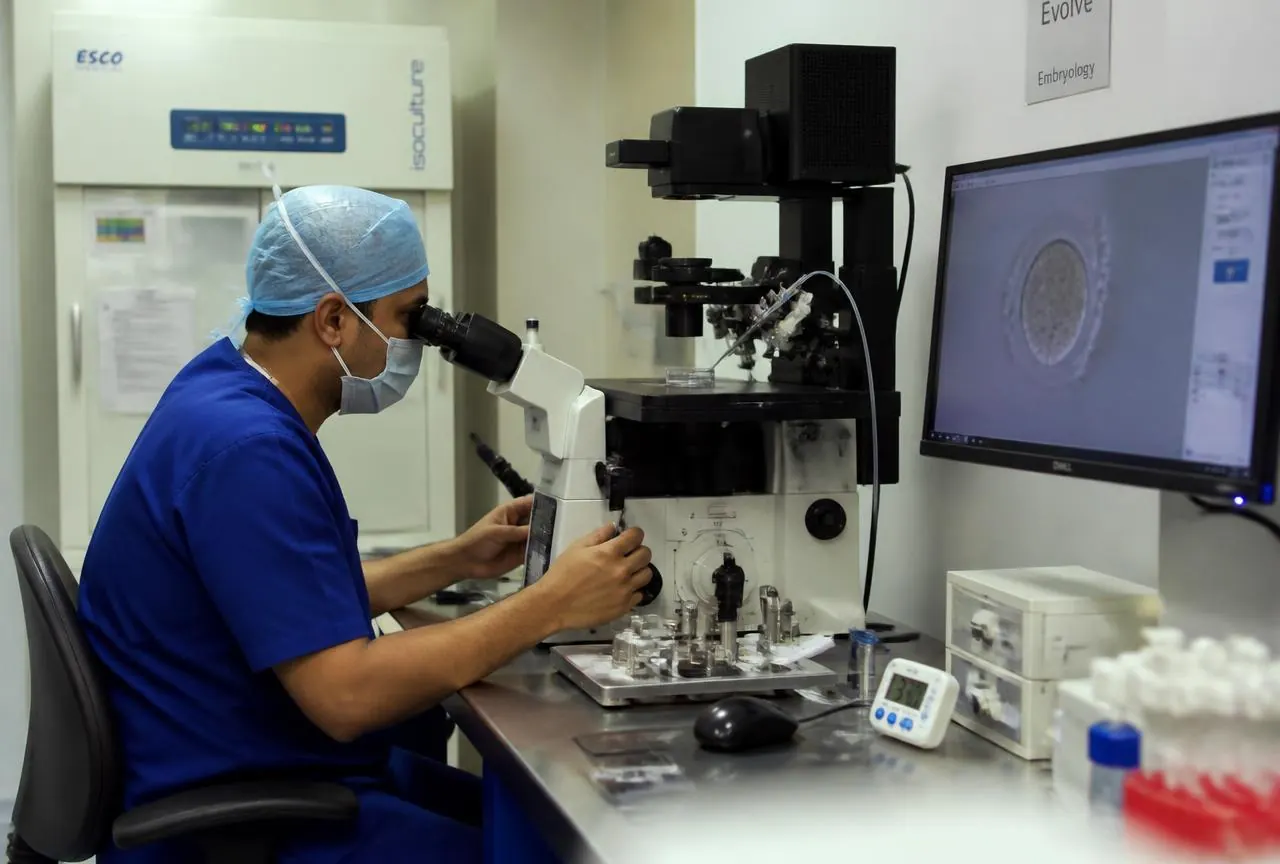
Egg collection, sperm preparation and the ICSI decision

Egg collection usually involves passing an ultrasound-guided needle through the vaginal wall to retrieve fluid from ovarian follicles. Sedation or anaesthesia is commonly used, with preparation and recovery instructions tailored to the person and setting. Temporary cramping or light spotting may follow. Bleeding, infection, injury to nearby structures and anaesthetic complications are possible, although the procedure is planned to minimise these risks. Some follicles may yield no egg, and collected eggs may not all be mature enough for fertilisation.

A semen sample is prepared for laboratory use, with alternative sperm arrangements considered in advance when clinically necessary. In conventional IVF, eggs are exposed to prepared sperm. In intracytoplasmic sperm injection, or ICSI, an embryologist injects a single sperm into an egg. ICSI may be appropriate for certain sperm problems or previous fertilisation difficulties, but it is not routinely better for everyone. Neither method guarantees fertilisation or healthy embryo development. Ask why the proposed method fits your findings and what would happen if fertilisation does not occur.

Embryo development and choosing when to transfer

After fertilisation, embryos are observed in the laboratory to assess development. Some stop developing before transfer or freezing is possible. Appearance and developmental stage can help guide selection, but they do not prove chromosomal health or predict implantation with certainty. Embryo transfer usually uses a thin catheter passed through the cervix into the uterus. Discomfort varies, and technical difficulties are possible. The timing of transfer depends on embryo development, the uterine lining, hormone findings and the person's clinical circumstances.

A fresh transfer is not always advisable. Freezing suitable embryos for later transfer may be recommended when ovarian response creates safety concerns or when the uterus needs further preparation. Some embryos may not survive freezing and thawing, and storage does not promise pregnancy or unchanged quality. Discuss the number of embryos proposed for transfer: transferring more than one can increase the possibility of a multiple pregnancy and its associated risks. Consent should address freezing, storage arrangements, future use and decisions about embryos that are not used.

Recognising complications and understanding the result

Ovarian hyperstimulation syndrome, or OHSS, is a potential complication of stimulation in which enlarged ovaries and fluid shifts can cause illness. Seek urgent medical advice for worsening abdominal swelling or pain, persistent vomiting, reduced urination, breathlessness or faintness. After egg collection, heavy bleeding, fever or severe pain also needs prompt assessment. Ask for clear contact and emergency instructions before leaving. Recovery varies; follow advice about driving after sedation, physical activity, intercourse and returning to work rather than assuming immediate recovery.

After transfer, symptoms such as breast tenderness, cramps or spotting cannot reliably show whether implantation has occurred. Support medicines can cause similar effects. Test on the recommended date because testing too early can mislead. A positive pregnancy test requires follow-up, including ultrasound at the appropriate time to assess pregnancy location and development. Ectopic pregnancy and miscarriage remain possible after IVF. If the result is negative, do not stop prescribed medicines without instructions. A review can address the cycle findings, emotional impact and whether further treatment is reasonable.

  • Get written advice about urgent symptoms and where to seek care.
  • Confirm the pregnancy-test date and medicine instructions.
  • Arrange follow-up after either a positive or negative result.

Questions to bring to an IVF consultation at PRAVI

At a PRAVI IVF consultation in Kanpur, the aim should be to understand why IVF is being considered in your circumstances and what alternatives remain. Bring previous scans, semen reports, hormone results and records of earlier IUI or IVF treatment, including stimulation and embryo information if available. Dr. Monica Sachdeva is Medical Director and senior IVF specialist, and Dr. Rit Shukla is Chief Embryologist. The exact availability of procedures, your proposed pathway and the relevant consent requirements should be confirmed during consultation.

Ask what response is reasonably anticipated, why conventional IVF or ICSI is recommended, and which findings could lead to cancellation or embryo freezing. Discuss how laboratory updates are communicated and how egg, sperm and embryo identity checks and traceability are handled; do not assume a particular witnessing technology is used. Clarify how transfer decisions, unused embryos and unsuccessful fertilisation would be discussed. You can also ask about counselling support and a review after treatment. A useful consultation should leave room for uncertainty, questions and a decision not to proceed.

Frequently asked questions

This information does not replace an individual medical assessment. Treatment suitability, available services and any legal requirements must be confirmed with the clinic before you begin.

Other services