0% interest EMI options · Clear treatment costs explained before you begin · Book consultation

PGS / PGD genetic screening treatment at PRAVI IVF
Understanding embryo genetic testing before deciding whether it belongs in your IVF plan.

PGS / PGD genetic screening in Kanpur

PGS and PGD are older terms for genetic testing of embryos created through IVF. These tests can answer specific chromosome or inherited-condition questions, but they do not establish that an embryo is healthy in every respect or guarantee a baby. For patients considering testing in Kanpur, a PRAVI IVF consultation can help clarify the reason for testing, its limitations, and which services and referral arrangements are actually available.

  • The current terms are PGT-A for chromosome-number assessment, PGT-M for specific inherited conditions and PGT-SR for structural chromosome rearrangements.
  • Embryo testing examines a small cell sample and cannot rule out every genetic condition, birth difference or pregnancy complication.
  • PGT is not proven to benefit everyone undergoing IVF, and sex selection is not permitted.

Who this is for

  • Couples with a known risk of passing on a specific inherited condition who need advice about PGT-M.
  • People with a balanced chromosome rearrangement, such as a translocation, who may need assessment for PGT-SR.
  • Patients considering PGT-A after discussion of their reproductive history, age-related chromosome concerns and expected embryo numbers.
  • People with recurrent pregnancy loss or unsuccessful IVF who want to understand whether genetic evaluation is relevant rather than assuming embryo testing is necessary.
  • Patients who need genetic counselling before deciding between embryo testing, IVF without testing or other reproductive options.

Why patients choose PRAVI

High

IVF success rate

6,000+

Babies delivered

4.9/5

600+ patient reviews

18+

Years of fertility care

Mon – Sat · 9:00 AM – 7:00 PM

Step by step

How the PGS / PGD genetic screening process works

01

Clarify the genetic question

Review family history, previous pregnancies, IVF records and any genetic reports with the treating team. A genetics professional may recommend further assessment to establish whether there is a specific question that embryo testing can answer.

02

Confirm suitability and laboratory arrangements

Discuss the appropriate test, its limitations and whether a personalised laboratory work-up is needed. Confirm actual PRAVI availability, external laboratory arrangements, consent requirements and the plan for embryos with uncertain or unexpected results.

03

Create embryos and obtain a sample

An IVF cycle produces embryos for assessment. Suitable embryos may undergo biopsy at the blastocyst stage, with a small sample taken from outer cells; embryos are commonly frozen while the genetic laboratory analyses the sample.

04

Review results before choosing next steps

The clinical and genetics teams interpret the report alongside embryo development and your circumstances. Discuss transferable, affected, mosaic or inconclusive findings as applicable, including the possibility that no embryo is suitable for transfer.

05

Plan transfer and pregnancy follow-up

If an embryo is selected for transfer, preparation follows an individual clinical plan. Pregnancy testing and follow-up remain necessary, and prenatal genetic counselling should explain which screening or diagnostic tests may still be appropriate.

What PGS and PGD mean today

Preimplantation genetic testing, or PGT, examines genetic material from embryos created through IVF before a transfer decision is made. PGS, meaning preimplantation genetic screening, is now generally called PGT-A. It assesses whether the sampled cells have an expected chromosome number. PGD, meaning preimplantation genetic diagnosis, is an older umbrella term now usually replaced by PGT-M for a specific monogenic, or single-gene, condition and PGT-SR for structural chromosome rearrangements. These categories answer different questions and are not interchangeable.

For example, a family with an identified disease-causing gene variant may need a targeted PGT-M assessment rather than chromosome screening alone. A person with a balanced chromosome rearrangement may be advised to discuss PGT-SR because some embryos could inherit an unbalanced arrangement. PGT-A does not routinely identify such a family's specific gene condition. None of these tests provides a complete health certificate for an embryo, and choosing a test starts with identifying exactly what information would change your reproductive decisions.

When embryo testing may be worth discussing

PGT-M may be relevant when one or both prospective parents have a confirmed genetic finding associated with a risk of an inherited condition. PGT-SR may be considered when chromosome testing identifies a structural rearrangement that could produce unbalanced embryos. A genetics consultation helps establish inheritance, the condition's implications and whether a reliable embryo test can be developed. A family history alone may need investigation before the appropriate test can be chosen.

PGT-A requires a separate discussion. It may be considered in selected circumstances, including age-related chromosome concerns, but it is not proven to improve outcomes for everyone having IVF. Recurrent miscarriage or unsuccessful transfers do not automatically mean embryo chromosome testing is the next step; other causes may need assessment. When few embryos are expected, testing may leave no embryo recommended for transfer without improving the overall chance of a baby. IVF without testing, prenatal diagnosis or other lawful reproductive options may better fit some patients' needs and preferences.

The assessment before a PGT decision

The initial review usually brings together your reproductive history and the genetic question. Relevant information includes previous pregnancies, miscarriages, affected relatives, earlier IVF outcomes and existing chromosome or gene reports. Original laboratory reports are particularly useful because the precise variant or rearrangement matters. Depending on the concern, parental testing or samples from relatives may be requested. Do not assume that a previously reported genetic change is suitable for PGT without specialist interpretation.

Fertility assessment also matters because PGT requires embryos obtained through IVF. Ultrasound findings, semen assessment and ovarian reserve tests help inform the likely treatment response, but they cannot promise usable embryos. AMH mainly helps estimate egg quantity and response to stimulation; it does not establish egg quality or certainty of natural pregnancy. Ask whether genetic test development must be completed before stimulation, how the laboratory validates the proposed test and what would happen if the work-up cannot produce a reliable testing strategy.

  • Bring original genetic reports, relevant family history and previous IVF or pregnancy records.
  • Ask which test answers your specific concern and what it will not detect.
  • Confirm whether relatives' samples or additional genetic counselling are needed.

How embryos are sampled and tested

The process begins with an IVF cycle involving ovarian stimulation, monitoring and egg collection, followed by fertilisation in the laboratory. Conventional IVF or ICSI may be used according to clinical and laboratory considerations. ICSI is not routinely better for all patients, although a particular genetic testing protocol may influence the fertilisation method discussed. Fertilisation with either method does not guarantee implantation or live birth. Embryos are cultured, and only those developing suitably can usually proceed to blastocyst biopsy.

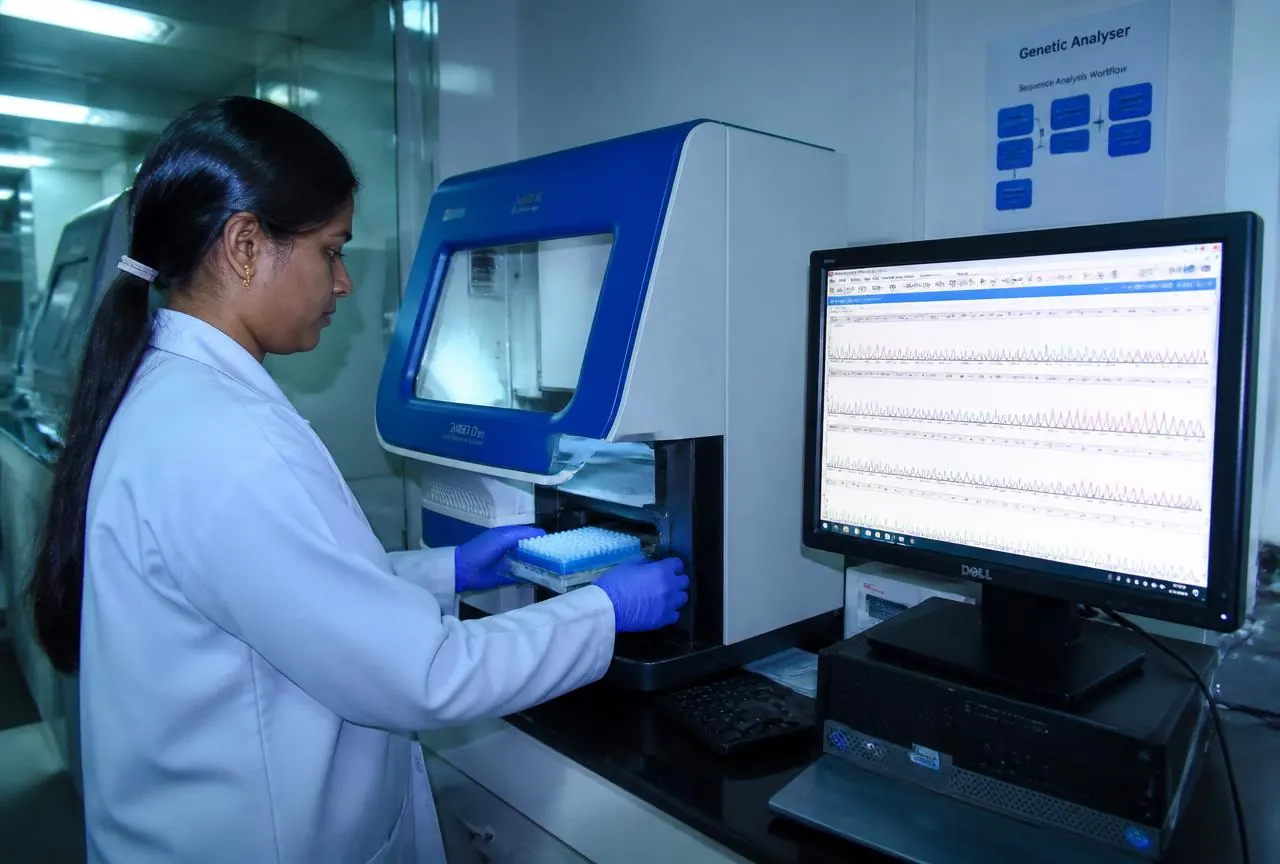
During biopsy, a small number of cells are taken from the outer layer, which mainly contributes to the placenta, rather than directly sampling the inner cell mass that develops into the fetus. The sample is analysed by a genetic laboratory using the agreed method. Embryos are commonly vitrified while results are awaited, with transfer considered in a later cycle. Some embryos will not reach a suitable stage or yield an interpretable result. Exact biopsy arrangements, laboratory location, timelines and consent requirements must be confirmed at consultation.

Understanding normal, mosaic and uncertain findings

A PGT-A report may describe an embryo as euploid, meaning the sampled cells have the expected chromosome number, or aneuploid, meaning a chromosome-number difference was detected. Some findings are reported as mosaic, suggesting a mixture of cell patterns in the sample. Because the biopsy represents only a small part of the embryo, results may not fully reflect every cell. False-positive, false-negative and inconclusive results can occur, and reporting thresholds and interpretation may differ between laboratories.

PGT-M and PGT-SR reports use categories related to the specific condition or rearrangement, and their meaning needs careful explanation. Some methods cannot distinguish every relevant carrier or chromosome state. An inconclusive result may prompt discussion of reanalysis, another biopsy or not testing further; none is automatically the right choice. Mosaic findings require specialist counselling before any transfer consideration, taking account of the finding and applicable policy. Ask for an explanation of the written report rather than treating a laboratory label as a prediction of a child's future health.

What testing cannot promise, and its added risks

PGT can inform embryo selection for a defined genetic question, but it does not make an embryo genetically healthier. PGT-A should not be described as a universal way to improve implantation or prevent miscarriage. Pregnancy loss can have causes unrelated to the chromosome findings assessed, and a euploid result does not guarantee implantation, an uncomplicated pregnancy or live birth. Even targeted PGT-M cannot exclude unrelated genetic conditions, developmental differences or every possible error in testing.

Biopsy, freezing and warming add handling steps and carry a possibility of embryo damage or loss. Not every frozen embryo survives warming, and unchanged quality or a future pregnancy cannot be promised. The underlying IVF cycle also carries risks, including ovarian hyperstimulation and complications of egg collection such as bleeding or infection. There may be no suitable embryo after testing, or uncertainty about whether an embryo should be excluded. Discuss these possibilities before treatment, including your preferences for storage and decisions about embryos not selected for transfer.

Preparing for treatment and follow-up after transfer

Before starting, allow time for genetic counselling, any laboratory work-up and discussion between both partners where relevant. Review medicines, supplements and existing health conditions with the treating doctor without stopping prescribed treatment yourself. Clarify consent for biopsy, genetic analysis, freezing, storage and communication of results. Ask how genetic information is protected and whether unexpected findings could have implications for relatives. Sex selection is not permitted, and embryo testing must not be requested or used for that purpose.

Recovery relates mainly to egg collection rather than embryo biopsy, which takes place in the laboratory. Follow the clinic's instructions on activity and symptoms requiring help; worsening abdominal pain, heavy bleeding, fever, breathlessness or marked abdominal swelling need prompt medical assessment. After transfer, follow the agreed pregnancy testing schedule. A pregnancy following PGT still needs prenatal counselling because embryo testing does not replace routine antenatal care. Screening and diagnostic options, including chorionic villus sampling or amniocentesis when appropriate, should be discussed according to the original indication and results.

Questions for your PGT consultation at PRAVI IVF

At a PRAVI IVF consultation in Kanpur, start by asking whether your concern requires genetic counselling, a fertility assessment or both. Explain what you hope testing will help you decide, especially if you are trying to avoid a known inherited condition or have experienced pregnancy loss. Ask the team to separate the reason for IVF from the reason for PGT. A useful discussion should compare testing with reasonable alternatives and acknowledge uncertainty rather than assume every IVF patient needs screening.

Exact PRAVI availability and the proposed pathway need confirmation before you consent. Ask where biopsy and genetic analysis would occur, who interprets the results and whether specialist genetics referral is needed. Confirm how samples and embryos are identified and traced; these checks support identity and traceability, not proof of embryo health. Request a clear plan for no-result, mosaic or affected findings, including circumstances in which no transfer is advised. You should also understand who will arrange prenatal counselling if pregnancy occurs.

  • What specific benefit is expected in my circumstances, and what evidence supports that expectation?
  • Which parts of the testing pathway are available here, and which require an external service?
  • How would uncertain results or no suitable embryo change the next decision?

Frequently asked questions

This information does not replace an individual medical assessment. Treatment suitability, available services and any legal requirements must be confirmed with the clinic before you begin.

Other services