0% interest EMI options · Clear treatment costs explained before you begin · Book consultation

Verification services treatment at PRAVI IVF
Understanding identity checks and traceability during fertility treatment

Verification services in Kanpur

Verification services in fertility care refer to checks that help link eggs, sperm, embryos and treatment records to the correct people and intended treatment. They are not genetic tests or a way to establish embryo health. For patients considering care at PRAVI IVF in Kanpur, understanding these checks can support informed consent. The clinic’s actual verification methods, documentation and service availability should be confirmed during consultation.

  • Identity verification and traceability are different from genetic testing or embryo assessment.
  • Verification does not establish embryo health or guarantee implantation, pregnancy or live birth.
  • The actual PRAVI protocol, available services and consent requirements need confirmation at consultation.

Who this is for

  • People planning IVF or ICSI who want to understand how their eggs, sperm and embryos are identified.
  • Patients preparing for frozen embryo transfer or the use of previously stored eggs or sperm.
  • People arranging an authorised transfer of stored reproductive material between centres.
  • Patients considering legally permitted donor treatment who need clarity about identity, confidentiality and traceability.
  • People with questions about mismatched details, consent records or communication concerning stored material.

Why patients choose PRAVI

High

IVF success rate

6,000+

Babies delivered

4.9/5

600+ patient reviews

18+

Years of fertility care

Mon – Sat · 9:00 AM – 7:00 PM

Step by step

How the Verification services process works

01

Clarify what you want verified

Explain whether your concern involves patient identity, a sample label, stored embryos, transfer records or donor documentation. This helps the team distinguish routine traceability questions from issues requiring clinical review or a formal records enquiry.

02

Review identity and consent records

Bring the identity documents and treatment records requested by the clinic. Ask how names, identifiers and consent forms are checked, and how discrepancies are resolved before reproductive material is collected, used, stored or released.

03

Discuss checks at treatment stages

Ask the team to explain verification around collection, fertilisation, freezing, warming and embryo transfer. Confirm which checks involve you directly and which are documented within laboratory procedures, without assuming any particular technology is used.

04

Confirm storage or transport documentation

If material is stored or moved between centres, request an explanation of the inventory, permissions and handover records. Confirm who coordinates enquiries and how the receiving centre acknowledges the material and its accompanying documentation.

05

Agree on follow-up and questions

Before proceeding, understand which records you will receive and whom to contact about an inconsistency. Ask how concerns are investigated, how you will be informed and whether treatment should pause while an issue is clarified.

What verification means in an IVF laboratory

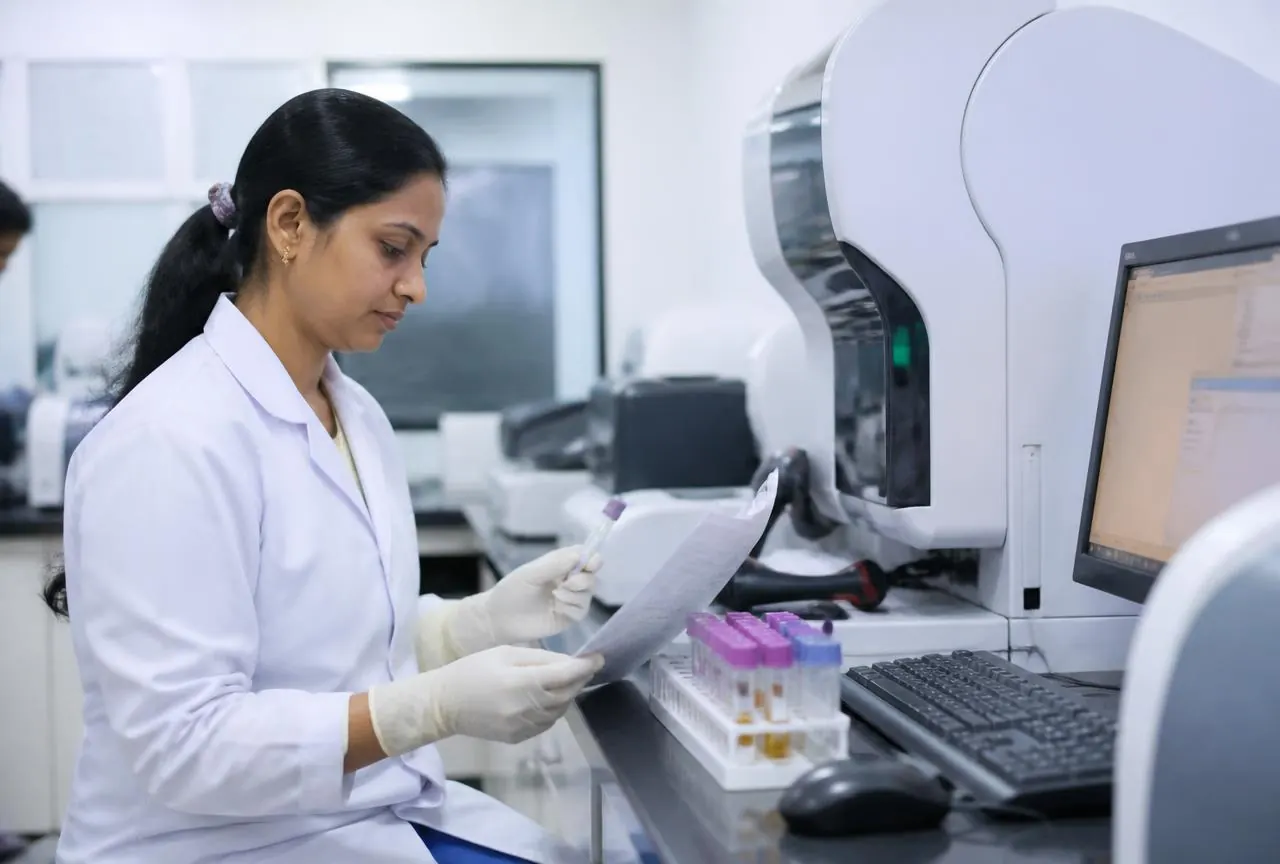
During fertility treatment, eggs, sperm and embryos pass through several clinical and laboratory stages. Verification means checking that the people, reproductive material, instructions and records match at the relevant stage. Traceability means maintaining a documented link across those stages, including collection, processing, storage and use. These are safety processes within care rather than a treatment that changes an embryo. The phrase “embryo verification” can be unclear, so patients should ask exactly what is being checked and what information the check can establish.

A verification process may use identifying labels, records and witnessing procedures, but methods differ between centres. A witness check may involve another trained person or a validated electronic system; neither should be assumed to be available at PRAVI without confirmation. Ask how the clinic maintains identification when material is moved between containers or work areas. A useful explanation should describe the process in understandable terms, rather than relying only on references to technology or laboratory expertise.

When patients may need a verification discussion

Anyone undergoing IVF or ICSI can reasonably ask how identity checks are built into treatment. The discussion is especially relevant when using frozen eggs, sperm or embryos, because records must remain linked to stored material over time. It also matters when a patient changes their name, corrects demographic details or continues treatment at another centre. These circumstances do not necessarily indicate a problem, but they make clear documentation and communication particularly important before the next planned procedure.

Verification is not usually a separate procedure that patients need to undergo to improve their fertility. Someone seeking an explanation for unsuccessful implantation or repeated pregnancy loss will need clinical assessment rather than identity checks alone. Similarly, a person asking whether an embryo has a chromosome condition needs a different discussion about appropriate testing and its limitations. Where there is a specific discrepancy in records, the immediate priority is to clarify it with the responsible team, not to interpret it as evidence of embryo damage.

Which identity details and permissions should be reviewed?

The initial review should establish whose treatment is being discussed, what material is involved and what action is planned. Relevant documents may include identity records, previous treatment summaries, storage information and signed consent forms. The clinic should explain its own requirements, including how it records identifiers and handles differences in spelling or other personal details. Bring discrepancies to the team’s attention early rather than assuming that matching names alone will be sufficient for every laboratory decision.

Consent and identity checks answer related but different questions. A correctly identified sample is not automatically authorised for every possible use. Instructions about fertilisation, storage, transfer, transport or disposal need to be reviewed within the applicable legal and clinical framework. If donor material is involved, current ART Act and Rules apply, with sourcing through registered ART banks as legally required. Ask how traceability is maintained while donor confidentiality is protected, and which information can lawfully be shared with you.

  • Ask which documents must be provided before the planned procedure.
  • Flag name changes, inconsistent identifiers or unclear consent instructions promptly.
  • Confirm how corrected records remain linked to earlier treatment documentation.

Checks around fertilisation, storage and embryo transfer

Common points for identity verification include sperm collection, egg collection, preparation for IVF or ICSI, freezing, warming and embryo transfer. The precise sequence depends on the treatment and the laboratory’s procedures. At some stages, patients may be asked to confirm personal details directly. At other stages, checks take place within the laboratory. Ask which steps are witnessed, how a completed check is recorded and what happens if the information does not agree before work proceeds.

Before an embryo transfer, the discussion should distinguish identifying the intended embryo from deciding which embryo is clinically suitable to transfer. Embryo selection may consider development, appearance and other relevant clinical information; identification confirms its link to the treatment record. Verification itself does not improve embryo development. IVF or ICSI fertilisation does not guarantee implantation or live birth, and ICSI is not routinely better for everyone. Any recommendation for these treatments should be explained separately from the laboratory’s identity safeguards.

What verification cannot tell you about an embryo

An identity check cannot establish whether an embryo is chromosomally typical, carries an inherited condition or will result in a healthy baby. It also cannot measure egg quality or explain every unsuccessful treatment cycle. Claims that verification produces higher IVF success need evidence and should not be assumed from the service name. Even a well-documented identification process has limitations: its effectiveness depends on accurate information, consistent implementation, appropriate training and a clear response when something appears wrong.

Genetic testing is a separate service with separate indications and consent. Tests previously called PGS or PGD are now generally described as PGT-A, PGT-M or PGT-SR, depending on their purpose. These tests are not proven to benefit everyone and may produce mosaic, false or inconclusive results. They do not remove the need for prenatal counselling and discussion of appropriate testing during pregnancy. Sex selection is not permitted. Do not interpret a verification record as a genetic report, or assume that PRAVI performs genetic testing in-house.

Keeping records linked during storage and transport

For frozen reproductive material, traceability needs to continue beyond the original treatment cycle. Patients can ask how their storage inventory is recorded, how changes are documented and how contact details and permissions are kept current. A storage record should be discussed in terms of what was stored and its documented status, not as a promise of future pregnancy. Some eggs or embryos may not survive freezing and warming; verification cannot prevent all biological loss or guarantee unchanged quality.

Moving material between centres requires coordination, appropriate consent and documentation that allows the receiving team to reconcile what arrives with what was expected. Ask who is responsible for arranging transport, how identification and handover are recorded, and how receipt is confirmed. Transport conditions and identity verification are separate issues, although both matter. Do not assume that a request for verification includes a transport service. If records from another centre are incomplete or inconsistent, further clarification may be needed before material can be accepted or used.

Preparing for checks and raising a discrepancy

Identity verification alone does not require medicines, fasting, anaesthesia or physical recovery. Any preparation instructions relate to the accompanying procedure, such as egg collection or embryo transfer, and should come from your treating team. Before attending, organise the requested documents and note any questions about names, identifiers, stored material or permissions. Follow-up after verification usually concerns records and clarification, rather than a medical result. Ask what written information you can receive and how to request an explanation of unfamiliar terms.

If a label, document or verbal statement seems inconsistent, tell the team immediately and request clarification before the associated procedure continues. A discrepancy may be administrative, but it should not be dismissed without review. Ask who will investigate, what can be confirmed from existing records and when you should expect an update. Keep copies of relevant correspondence. Confidentiality also matters: sensitive reproductive information should be shared through the clinic’s authorised channels, with access and disclosure governed by consent and applicable law.

  • State the exact discrepancy rather than guessing its cause.
  • Ask whether the planned procedure needs to pause pending clarification.
  • Request a clear explanation of the review and any documented correction.

Discussing verification services at PRAVI IVF in Kanpur

At a PRAVI IVF consultation in Kanpur, begin by explaining whether you want information about routine safeguards or help with a specific record concern. Ask the team to confirm what “verification services” means in your proposed care, which stages it covers and whether any separate review is available. PRAVI has centres in Kanpur and New Delhi, but you should confirm where your treatment, laboratory work and storage would take place rather than assuming that arrangements are identical between locations.

Laboratory questions may be appropriate for the embryology team; Dr. Rit Shukla is PRAVI’s Chief Embryologist. Ask how you can obtain an explanation of the actual protocol, including witnessing methods, documentation and escalation of discrepancies. Do not assume a particular technology or staffing arrangement from that role alone. Before giving consent, you should understand what is being checked, what remains outside the scope of verification and whom to contact afterwards. The purpose of this conversation is informed participation in care, not a guarantee of an error-free process or pregnancy.

Frequently asked questions

This information does not replace an individual medical assessment. Treatment suitability, available services and any legal requirements must be confirmed with the clinic before you begin.

Other services