
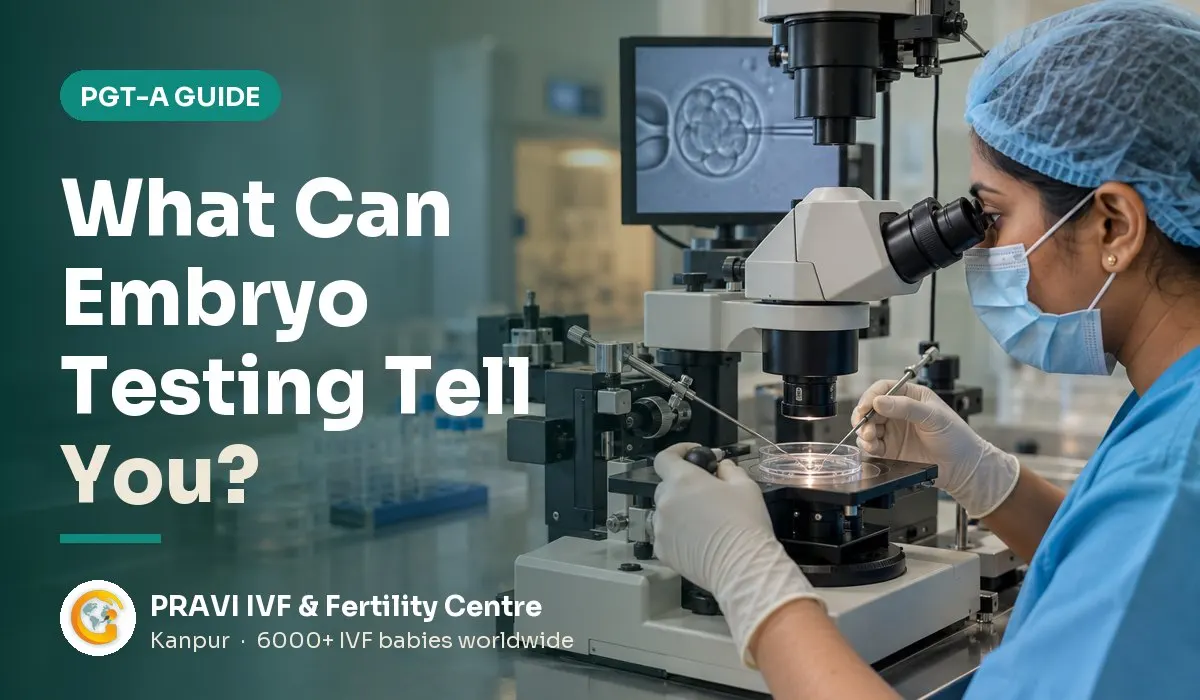
ICSI for Male Infertility: When Is It Recommended?
ICSI may help when sperm-related problems make fertilisation difficult. Understand when it is recommended, what an assessment involves, and how couples can choose their next step together.
ICSI for male infertility is usually recommended when very low sperm numbers, poor sperm movement, or the need for surgically retrieved sperm makes fertilisation difficult. It may also help after an IVF cycle with failed or unexpectedly low fertilisation. The decision should consider both partners’ fertility assessments, rather than one semen report alone.
If you have been advised to consider ICSI, feeling hopeful and worried at the same time is natural. Understanding why it is suggested can help you make a calmer, more informed decision.
What Is ICSI, and How Does It Work?
ICSI stands for intracytoplasmic sperm injection. It is a laboratory technique used during IVF, not a separate treatment that avoids IVF. An embryologist injects a single sperm directly into a mature egg to help fertilisation occur.
In conventional IVF, eggs and prepared sperm are placed together, allowing a sperm to enter an egg on its own. With ICSI, the injection bypasses several steps that sperm would normally need to complete.
However, injecting sperm does not guarantee fertilisation, a healthy embryo, or pregnancy. You can explore the basic process on our page about ICSI treatment in Kanpur.
When Is ICSI Recommended for Male Infertility?
Very Low Sperm Count
When very few sperm are available, the chances of an egg being fertilised through conventional IVF may be reduced. ICSI allows the laboratory to use an individual viable sperm for each suitable mature egg.
A mildly reduced count does not automatically mean ICSI is needed. The complete semen assessment and the couple’s wider fertility picture matter.
Severely Reduced Sperm Movement
Sperm need effective movement to reach and fertilise an egg naturally. When movement is severely reduced, ICSI may help bypass this difficulty. If sperm appear immotile, the laboratory may need additional assessment to determine whether they are alive and usable.
Significant Sperm Shape Abnormalities
Sperm morphology describes their shape. Significant abnormalities may contribute to an ICSI recommendation, particularly when accompanied by low count or poor movement. Certain specific sperm defects may also make ICSI appropriate.
However, a low morphology result on its own does not always mean ICSI is necessary. It should not be interpreted as proof that natural conception is impossible.
Sperm Retrieved Through a Procedure
Some men have azoospermia, meaning no sperm are found in the ejaculate. This can happen because of a blockage or difficulty producing sperm. Depending on the cause, sperm may sometimes be retrieved from the epididymis or testis.
Retrieved sperm are generally used with ICSI. Not every man with azoospermia will have retrievable sperm, so investigation and counselling are important. Read about TESA and PESA for sperm retrieval to understand some available approaches.
Previous Failed or Poor Fertilisation with IVF
ICSI may be considered when conventional IVF previously resulted in no fertilisation or unexpectedly few fertilised eggs. The team should review sperm findings, egg maturity, and the earlier cycle before recommending the next approach.
Which Tests Help Decide Whether ICSI Is Needed?
A semen analysis is usually an important starting point. It assesses sperm count, movement, and shape, along with other features. Results can vary, and recent fever, collection difficulties, or other factors can affect a sample. An abnormal result often needs a repeat test.
Our guide to understanding your semen analysis report can help you prepare questions. Reference values guide assessment; they do not create a simple dividing line between fertile and infertile.
Depending on the findings, further assessment may include:
- Medical and reproductive history, including previous surgery or infections.
- Review of medicines, testosterone use, and anabolic steroids.
- Physical examination by an appropriate specialist.
- Hormone tests when clinically indicated.
- Genetic testing in selected cases of azoospermia or severely reduced sperm count.
Sperm DNA fragmentation testing is not routinely needed for every couple. Its usefulness depends on the clinical situation. Neither an abnormal result nor a single semen parameter should automatically lead to ICSI.
Does Every Couple with Male Infertility Need ICSI?
No. Some couples may benefit from addressing a treatable cause, timed intercourse, IUI, or conventional IVF. The choice depends on the severity of the sperm problem, how long you have been trying, and the female partner’s age and fertility assessment.
Some hormonal disorders can be treated, and selected men may benefit from treatment of a clinically significant varicocele. These approaches take time and are not suitable for everyone. Your doctor can discuss whether waiting is reasonable or whether assisted conception should be considered sooner.
ICSI is also not automatically better than conventional IVF when there is no male-factor problem or previous fertilisation difficulty. Ask what specific benefit is expected in your case.
What Happens During an ICSI Cycle?
Most of the process follows the usual IVF pathway:
- Ovarian stimulation: The female partner receives medicines and monitoring to support egg development.
- Egg collection: Eggs are collected through a planned procedure.
- Sperm preparation: A semen sample is processed, or previously arranged retrieved or frozen sperm are used.
- Microinjection: An embryologist injects a sperm into each suitable mature egg.
- Embryo assessment: The laboratory checks for fertilisation and monitors embryo development.
- Transfer or freezing: Suitable embryos may be transferred or frozen according to the treatment plan.
If obtaining sperm may be difficult, discuss the collection plan and possible backup arrangements before egg collection. Clear planning can reduce uncertainty on the day.
What Can ICSI Do, and What Are Its Limits?
ICSI helps sperm enter the egg. It does not treat the underlying cause of male infertility, repair sperm DNA, or remove inherited genetic risks. Choosing a sperm by its appearance cannot confirm that it is genetically normal.
Some eggs may be damaged during injection, and not every injected egg fertilises or develops into a suitable embryo. Pregnancy also depends on factors such as egg quality, embryo development, and uterine health.
IVF-related risks, including ovarian hyperstimulation and complications of egg collection, should be explained before treatment. Where an inherited cause of male infertility is suspected, genetic counselling can help couples understand possible implications for a child.
How Can Couples Prepare?
Stop smoking, avoid recreational drugs and anabolic steroids, and discuss alcohol use with your doctor. Maintain regular physical activity and a balanced diet. Do not start testosterone for fertility: it can suppress sperm production.
Tell your doctor about all medicines and supplements, but do not stop prescribed treatment without advice. Lifestyle changes support health, though they cannot guarantee improved sperm quality or replace necessary treatment.
Male infertility is a medical issue, not a measure of masculinity or anyone’s fault. Attending consultations together can help both partners feel supported. PRAVI IVF & Fertility Centre, Kanpur, offers information on male infertility assessment and treatment to help you understand your options.
For personalised guidance, book an appointment at PRAVI IVF & Fertility Centre, Kanpur, Uttar Pradesh, or WhatsApp +91 80091 50040. Bring previous reports so you can discuss whether ICSI is the right next step for you.
Frequently asked questions
Can ICSI help when the sperm count is very low?
ICSI may help when very few viable sperm are available because one sperm is injected into each suitable mature egg. Your specialist will assess the complete semen report and both partners’ fertility before recommending it.
Is ICSI possible if no sperm are found in semen?
Sometimes. Depending on the cause of azoospermia, sperm may be retrieved from the epididymis or testis and used with ICSI. Retrieval is not possible in every case, so further investigation and counselling are needed.
Does poor sperm morphology always require ICSI?
No. Low morphology alone does not automatically require ICSI. Sperm count, movement, any specific sperm defects, previous fertilisation history, and the female partner’s assessment also influence the decision.
Does ICSI guarantee fertilisation or pregnancy?
No. ICSI helps a sperm enter an egg, but fertilisation and embryo development may still not occur. Pregnancy depends on several factors, including egg quality, embryo development, and uterine health.
Is sperm DNA fragmentation testing necessary before ICSI?
It is not routinely needed for every couple. A specialist may consider it in selected situations if the result could help guide care. ICSI does not repair sperm DNA damage.