
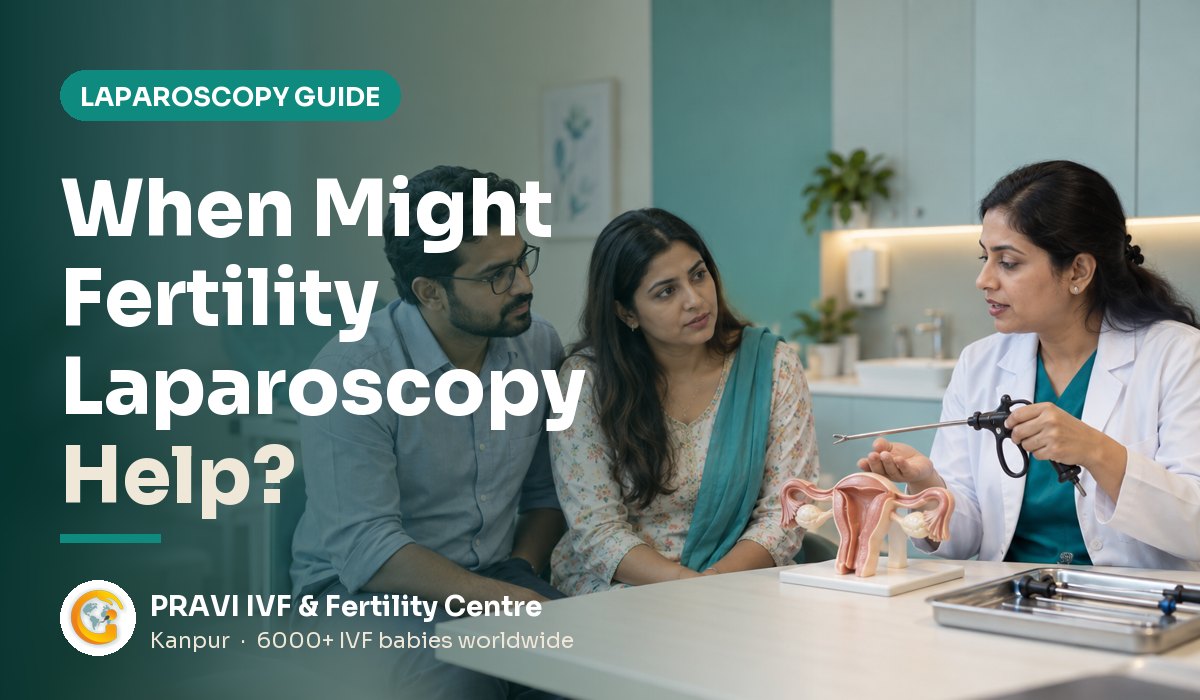
Fertility Laparoscopy in Kanpur
Medically reviewed by Dr. Ankita · Updated 5 Oct 2026
Fertility laparoscopy helps find and treat hidden causes of infertility like blocked tubes and endometriosis. Learn how this gentle keyhole procedure works at PRAVI IVF Kanpur.
Trying to have a baby can feel like an emotional roller coaster. Month after month, seeing a single line on a home pregnancy test brings quiet heartbreak. Many couples in Uttar Pradesh spend months or even years taking basic medicines, yet the doctor tells them their routine ultrasounds look normal. When simple tests fail to explain why you are not conceiving, your doctor may suggest a specialized procedure called fertility laparoscopy.
At PRAVI IVF & Fertility Centre, we meet many couples who feel anxious when they hear the word “surgery.” It is completely natural to feel scared. However, modern medical care has changed dramatically. A fertility laparoscopy is not like an old-fashioned open operation. It is a gentle, minimally invasive “keyhole” procedure that allows your fertility doctor to look directly at your reproductive organs and fix problems at the very same time.
Under the clinical guidance of Medical Director Dr. Monica Sachdeva and our reproductive surgery expert Dr. Ankita, our Kanpur centres at Swaroop Nagar and Shardha Nagar provide world-class surgical care to help you take confident steps toward parenthood.
What is Fertility Laparoscopy?
Fertility laparoscopy is a specialized keyhole surgery performed under general anesthesia. During the test, a skilled surgeon makes a tiny cut—usually smaller than a fingernail—inside or just below your belly button. A thin, lighted tube with a miniature high-definition camera (called a laparoscope) is inserted through this opening.
This camera sends magnified, high-clarity images to a video screen in the operating theatre. It allows your fertility doctor to see your uterus, fallopian tubes, ovaries, and the pelvic lining clearly. Routine ultrasounds and X-rays only show shadows and outlines. A laparoscopy lets us see the real texture, colour, and condition of your tissue.
According to the World Health Organization (WHO), millions of people worldwide experience infertility, and mechanical factors in the pelvis account for a large portion of these challenges. With advanced laparoscopy in Kanpur, your doctor can not only find the issue but also treat it during the very same sitting.
Why Do Doctors Recommend Fertility Laparoscopy?
Not every person trying to get pregnant needs surgery. Most fertility journeys begin with blood tests, semen analysis, and pelvic ultrasounds. But when these preliminary steps do not provide answers, or when specific issues are suspected, laparoscopy becomes the gold standard test.
Here are the most common conditions we diagnose and correct through this procedure:
1. Endometriosis
Endometriosis is a condition where tissue similar to the lining of the womb grows outside the uterus—such as on the ovaries, fallopian tubes, or pelvic wall. It can cause severe period pain, pain during intimacy, or heavy bleeding. In many cases, it creates silent inflammation that damages egg quality or stops embryos from implanting.
Mild endometriosis is almost impossible to see on a standard ultrasound. Laparoscopy is the only reliable way to confirm it. During the surgery, the doctor can gently vaporize or remove these tissue patches to restore a healthy pelvic environment.
2. Blocked or Damaged Fallopian Tubes
For natural conception to happen, an egg must travel through the fallopian tube to meet the sperm. If the tubes are blocked, swollen, or twisted, pregnancy cannot occur. A condition called hydrosalpinx occurs when a tube fills with toxic fluid due to past infections.
During laparoscopy, a safe blue dye is flushed through the cervix to check if it flows freely out of the tubes. This is called chromopertubation. If a tube has mild scar tissue, the surgeon can gently free it. If a tube is severely damaged and leaking toxic fluid, clipping or removing it dramatically protects future IVF success.
3. Pelvic Adhesions and Scar Tissue
Past infections, pelvic inflammatory disease (PID), or previous surgeries (like an appendectomy or prior C-section) can leave internal bands of scar tissue called adhesions. These bands can glue the ovary to the bowel or pull the fallopian tube away from the ovary. Laparoscopic surgery allows your specialist to cut these adhesions gently, returning your organs to their natural positions.
4. Ovarian Cysts (Endometriomas)
“Chocolate cysts” are blood-filled cysts in the ovaries caused by endometriosis. If they grow large, they can cause pain and interfere with healthy egg development. A skilled fertility surgeon can peel these cysts out while preserving as much healthy ovarian tissue as possible. This careful approach is especially critical for women who may also need low AMH treatment in Kanpur.
5. Uterine Fibroids
Fibroids are non-cancerous muscular growths in the wall of the uterus. While small fibroids outside the womb rarely affect fertility, fibroids that press into the uterine cavity or distort the shape of the womb can cause implantation failure or recurrent miscarriages. Laparoscopy can be used to remove subserosal and intramural fibroids cleanly.
Diagnostic vs. Operative Laparoscopy: What Is the Difference?
Couples often ask us if laparoscopy is purely a test or an actual treatment. The answer is that it can be both. Often, what starts as an exploratory check turns into an immediate solution during the same procedure.
| Feature | Diagnostic Laparoscopy | Operative Laparoscopy |
|---|---|---|
| Primary Goal | To inspect pelvic organs and identify reasons for unexplained infertility. | To treat, remove, or repair pelvic problems found during inspection. |
| Common Actions | Checking fallopian tube patency with blue dye; viewing ovaries and uterus. | Removing ovarian cysts, clearing endometriosis, dividing scar tissue. |
| Incisions | Usually 1 or 2 tiny incisions (5 mm to 10 mm). | Usually 2 to 3 tiny incisions to insert micro-instruments. |
| Procedure Duration | About 25 to 40 minutes. | About 45 to 90 minutes, depending on the condition. |
| Recovery Time | Most patients return to daily desk work in 2 to 3 days. | Patients resume normal light routines within 4 to 7 days. |
The beauty of this dual approach is that you do not need two separate admissions. If Dr. Ankita identifies an issue during the diagnostic phase, she can correct it on the spot using specialized micro-instruments.
The Expert Touch: Why Surgeon Skill Matters for Fertility
Laparoscopy for fertility is very different from general laparoscopic surgeries like gallbladder removal. In fertility surgery, preserving every single millimetre of delicate reproductive tissue is essential. Using too much heat or electric energy near the ovaries can accidentally harm your remaining egg reserve (AMH levels).
Dr. Ankita holds an MRCOG from the UK, a Fellowship in Reproductive Medicine, and a specialized Diploma in Minimal Access Surgery. With over six years of focused experience, her approach prioritizes tissue preservation. Whether she is releasing an adherent ovary or removing a deep endometrioma, every movement is designed to protect your future ovarian function and maximize your chances of pregnancy.
Alongside Chief Embryologist Dr. Rit Shukla and gynaecologist Dr. Sakshi Tandon, our entire clinical team works together to ensure that surgical findings are immediately translated into an effective post-surgery conception plan.
Step-by-Step: What to Expect on Surgery Day
Understanding what happens step by step helps take away the fear of the unknown. Here is how your day unfolds at PRAVI IVF in Kanpur:
Before the Procedure
You will be advised to fast (no food or water) for about six to eight hours before your scheduled surgery time. Your medical team will review basic blood work, an ECG, and your pre-anesthesia checkup. We will ask you to change into a clean hospital gown and will place a small IV line in your hand for fluids and medications.
During the Surgery
You will be taken into our modern modular operation theatre. The anesthesiologist will administer medication that puts you into a deep, peaceful sleep so you will not feel any pain. Once you are asleep, the surgeon gently inflates your abdomen with medical-grade carbon dioxide gas. This lifts the abdominal wall away from your internal organs, creating a clear and safe working space.
Through the tiny incision at the navel, the laparoscope is introduced. One or two additional tiny cuts may be made near your bikini line to insert delicate grasping and cutting tools. The team examines every corner of the pelvic cavity, flushes the tubes with blue dye, removes any pathology, and then gently releases the gas before closing the incisions with dissolvable stitches or surgical glue.
After the Surgery
You will wake up in our comfortable recovery room under the warm care of our nursing staff. Most fertility laparoscopies are day-care procedures. This means that after resting for four to six hours, sipping light liquids, and walking comfortably to the washroom, you can return home to your own bed the very same evening.
Recovery and Home Care Tips
Recovery after a fertility laparoscopy is remarkably smooth for most women. Still, giving your body time to heal is important. Here are practical tips to keep in mind:
- Managing Gas Discomfort: It is common to feel a dull ache in your shoulders or neck for a day or two after surgery. This is caused by residual carbon dioxide irritating the diaphragm. Gentle walking around your room and warm tea help your body absorb and expel this gas quickly.
- Wound Care: Keep your tiny incision sites dry and clean. You can take a shower after 48 hours if you keep waterproof coverings over the cuts. Loose cotton kurtas or pants will prevent friction against your waistband.
- Diet: Start with light, easily digestible meals such as khichdi, dalia, soups, and fresh fruits. Avoid deep-fried, heavy foods for a few days to prevent constipation and bloating. You can also review our guide on lifestyle tips to improve fertility in Kanpur for balanced nutrition advice.
- Rest and Activity: Take complete rest for the first 48 hours. Most women can resume work from home or light desk jobs within three to four days. Avoid heavy weightlifting, strenuous gym workouts, or driving for about two weeks.
How Does Laparoscopy Improve Your Pregnancy Chances?
Patients often ask: “Doctor, will this surgery really help us hear the good news (khushi ki khabar)?” Yes, in many cases, it significantly shifts the odds in your favour. According to educational insights from the American Society for Reproductive Medicine (ReproductiveFacts.org), treating mild-to-moderate endometriosis and clearing tubal blockages can improve spontaneous conception rates within six to nine months following surgery.
Here is how fertility laparoscopy enhances your chances:
- Restores Pelvic Anatomy: By clearing adhesions, your ovaries and fallopian tubes can interact freely again, allowing the tube to collect the released egg naturally.
- Lowers Toxic Inflammation: Removing endometriosis patches clears inflammatory cytokines that hinder sperm motility and egg fertilization.
- Prepares the Uterus for IVF: If natural conception is not possible and you require IVF, removing damaged tubes (hydrosalpinx) or fibroids doubles the chance of embryo implantation by preventing fluid backflow into the uterine cavity.
- Provides Certainty: Instead of guessing month after month, you and your fertility specialist gain exact clarity on your pelvic health, helping you choose the right path without wasting precious time.
Understanding the Cost of Fertility Laparoscopy in Kanpur
At PRAVI IVF, we believe in complete financial transparency. We know that fertility treatments can cause worry regarding expenses, and unexpected charges only add unnecessary stress. The overall cost of a fertility laparoscopy is not one single flat rate because every woman’s medical needs are unique.
The cost of your procedure typically depends on several factors:
- Scope of the Surgery: A simple diagnostic check takes less time and resources than an extensive operative procedure involving advanced cyst removal or severe adhesiolysis.
- Anesthesia and OT Facilities: The use of advanced modular theatres, high-definition laparoscopy towers, and certified anesthesiologists ensures the highest patient safety.
- Combined Procedures: Many doctors perform a hysteroscopy (inspecting the inside of the womb) at the same time as the laparoscopy. Combining both saves you from having two separate hospital admissions.
- Insurance Support: Many health insurance policies cover diagnostic and operative laparoscopy when performed to treat medical conditions like endometriosis, chronic pelvic pain, or ovarian cysts. Our team assists with insurance paperwork to make claims seamless.
Rather than providing inaccurate ballpark numbers, our team provides a clear, detailed written estimate after Dr. Ankita completes your initial consultation and ultrasound assessment.
Compassionate Care for Kanpur and Surrounding Towns
Travelling back and forth for medical appointments should not feel like an uphill battle. PRAVI IVF operates two state-of-the-art centres in Kanpur: one in Swaroop Nagar and another in Shardha Nagar. Whether you are living near Kakadeo, looking for an IVF centre near Juhi & Shastri Nagar, Kanpur, or visiting us from neighbouring districts, we are easily accessible.
We regularly care for families travelling from surrounding cities who need advanced surgical expertise. For instance, our specialized protocols make us a trusted IVF centre for Unnao patients in Kanpur, allowing couples to travel home comfortably on the same day after their day-care laparoscopy.
When Should You Consult a Doctor About Laparoscopy?
You do not need to wait years in frustration before seeking expert surgical evaluation. You should consider booking a consultation if:
- You have been actively trying to conceive for over a year (or over six months if you are 35 or older).
- You experience severe, debilitating pain during your menstrual cycles or during intercourse.
- You have a previous history of pelvic infections, ruptured appendix, or complicated abdominal surgery.
- Your previous IUI cycles have failed despite good sperm parameters and timely ovulation.
- Your doctor noticed an ovarian cyst or suspected a tubal blockage on your previous ultrasound or HSG report.
Delaying evaluation can sometimes allow silent conditions like endometriosis to progress. Timely diagnosis gives you back control over your reproductive timeline.
Every fertility story is deeply personal, and taking the next step can feel daunting. If you are struggling with unexplained delays or persistent pelvic pain, our compassionate medical team is here to listen and help. We invite you to schedule a one-on-one discussion with Dr. Ankita at PRAVI IVF & Fertility Centre. Please visit our contact page or easily book your appointment online to begin your personalized care plan today.
Frequently asked questions
Is fertility laparoscopy considered a major surgery?
Fertility laparoscopy is a minimally invasive keyhole procedure, not a traditional open surgery. It is performed through tiny cuts smaller than a centimetre under general anesthesia. Most patients recover quickly and return home on the very same day.
How soon can I try to conceive after a fertility laparoscopy?
Most couples can begin trying to conceive naturally within two to four weeks once pelvic tissues have healed. If your procedure was done before starting an IVF or IUI cycle, your specialist will typically begin your treatment with your next menstrual period.
Will fertility laparoscopy leave visible scars on my stomach?
The incisions are very small, usually between 5 mm and 10 mm, and are placed inside the belly button or along the lower bikini line. Over time, these tiny marks fade significantly and become barely noticeable.
Why do I feel pain in my shoulders after laparoscopic surgery?
During the procedure, medical carbon dioxide gas is used to inflate the abdomen for clear visibility. Small pockets of residual gas can temporarily irritate the phrenic nerve near the diaphragm, causing referred shoulder pain that disappears naturally within 24 to 48 hours.
Can laparoscopy unblock fallopian tubes permanently?
If the blockage is caused by mild external scar tissue, your surgeon can release it during the procedure. However, if the tube is severely diseased from the inside or filled with toxic fluid, repairing it may not be possible, and your doctor may advise clipping it to protect your IVF outcomes.
Is laparoscopy safe for women with low AMH levels?
Yes, provided it is performed by an experienced reproductive surgeon who uses delicate, tissue-sparing techniques. At PRAVI IVF, Dr. Ankita avoids excessive heat energy near ovarian follicles to safeguard your remaining ovarian reserve.
How long do I need to take off work for the procedure?
Most patients need only two to three days of rest after a diagnostic laparoscopy. If you had extensive operative work done, such as cyst or fibroid removal, taking four to seven days off before resuming strenuous physical duties is ideal.
Is fertility laparoscopy covered under health insurance in Kanpur?
Many health insurance policies provide coverage when laparoscopy is performed for therapeutic or diagnostic medical reasons, such as treating endometriosis, fibroids, or chronic pelvic pain. The PRAVI IVF administrative team helps verify your policy benefits and assists with paperwork.